
About me
Jonathan montalvo "MOnty"
I’m a product designer who thrives between strategy and execution—shaping direction while staying deeply involved in the work. I’ve worked across startups and enterprise environments, helping teams navigate ambiguity and turn it into clear product decisions.
I’m known for my visual design craft and the ability to connect the dots across product, design, and engineering—bringing structure to complexity and creating forward momentum. My approach is hands-on, systems-minded, and focused on delivering outcomes that scale.
my approach to building products
From shaping the problem to shipping the solution, I focus on reducing risk, creating clarity, and helping teams move confidently from ambiguity to execution. My approach combines product thinking, systems design, close engineering collaboration, and AI-powered workflows to build high-quality products that can scale.
1. shape the problem & define direction
Shape problems around user needs, business goals, constraints, and opportunity
Surface assumptions early and pressure-test them before committing to solutions
Use AI and rapid exploration to expand possibilities and challenge initial thinking
Evaluate direction through value, usability, feasibility, and viability
2. explore solutions & test the thinking
Translate direction into flows, systems, interaction models, and prototypes
Explore multiple approaches before converging on a solution
Prototype quickly using design and AI-assisted workflows
Continuously refine based on insights, not opinions
3. shape with engineering & design for scale
Bring engineering into shaping early to understand feasibility and opportunity
Define behaviors, states, edge cases, constraints, and system logic together
Reduce ambiguity through clear, structured design decisions
Build reusable patterns that scale across products, platforms, and use cases
4. deliver with clarity & learn from what ships
Create clear product specs, behaviors, and acceptance criteria for execution
Maintain shared understanding across product, design, and engineering
Protect quality through iteration, feedback, and system consistency
Measure how solutions perform and use what we learn to improve them
1. shape the problem & define direction
Shape problems around user needs, business goals, constraints, and opportunity
Surface assumptions early and pressure-test them before committing to solutions
Use AI and rapid exploration to expand possibilities and challenge initial thinking
Evaluate direction through value, usability, feasibility, and viability
2. explore solutions & test the thinking
Translate direction into flows, systems, interaction models, and prototypes
Explore multiple approaches before converging on a solution
Prototype quickly using design and AI-assisted workflows
Continuously refine based on insights, not opinions
3. shape with engineering & design for scale
Bring engineering into shaping early to understand feasibility and opportunity
Define behaviors, states, edge cases, constraints, and system logic together
Reduce ambiguity through clear, structured design decisions
Build reusable patterns that scale across products, platforms, and use cases
4. deliver with clarity & learn from what ships
Create clear product specs, behaviors, and acceptance criteria for execution
Maintain shared understanding across product, design, and engineering
Protect quality through iteration, feedback, and system consistency
Measure how solutions perform and use what we learn to improve them
1. shape the problem & define direction
Shape problems around user needs, business goals, constraints, and opportunity
Surface assumptions early and pressure-test them before committing to solutions
Use AI and rapid exploration to expand possibilities and challenge initial thinking
Evaluate direction through value, usability, feasibility, and viability
2. explore solutions & test the thinking
Translate direction into flows, systems, interaction models, and prototypes
Explore multiple approaches before converging on a solution
Prototype quickly using design and AI-assisted workflows
Continuously refine based on insights, not opinions
3. shape with engineering & design for scale
Bring engineering into shaping early to understand feasibility and opportunity
Define behaviors, states, edge cases, constraints, and system logic together
Reduce ambiguity through clear, structured design decisions
Build reusable patterns that scale across products, platforms, and use cases
4. deliver with clarity & learn from what ships
Create clear product specs, behaviors, and acceptance criteria for execution
Maintain shared understanding across product, design, and engineering
Protect quality through iteration, feedback, and system consistency
Measure how solutions perform and use what we learn to improve them
Discover My Journey in Design
From agency work to enterprise, startups, and leadership, my path has been defined by a passion for purposeful design. Each role has deepened my ability to balance craft and strategy, preparing me to lead with vision while staying grounded in execution.
Principal Product Designer
Plei, Inc
2024 - Present
Principal Product Designer
Plei, Inc
2024 - Present
UX Manager | IC
Renaissance Learning
2022 - 2024
UX Manager | IC
Renaissance Learning
2022 - 2024
Senior UX Designer
PwC
2021 - 2022
Senior UX Designer
PwC
2021 - 2022
Product Designer
Wrecking Ball Studios
2020 - 2021
Product Designer
Wrecking Ball Studios
2020 - 2021
Senior UI Designer
Citrix
2019 - 2020
Senior UI Designer
Citrix
2019 - 2020
Senior Design Specialist
CBRE
2016 - 2019
Senior Design Specialist
CBRE
2016 - 2019
My Tech Stack
Just a few of the tools that support how I think, design, and scale—from discovery to delivery.

Figma
My central hub for design—where I build interfaces, create design systems, and collaborate with teams. From FigJam workshops to FigmaMake prototypes, it’s where ideas move from concepts to clickable experiences.

Linear
My project command center. Linear keeps product, UX, and engineering in sync—writing tickets, tracking progress, streamlining workflows, and keeping discovery and delivery connected without friction.

ChatGPT
My on-demand thought partner for research, writing, and ideation. My custom GPTs help me move faster while sharpening clarity and creativity.

Claude
I use Claude alongside Figma MCP and terminal-based workflows leveraging custom markdown files to turn prompts into working prototypes leveraging existing design systems to move from idea to build-ready concepts quickly.

Mixpanel
My analytics engine for tracking product usage, user behavior, and funnels—helping me uncover patterns, measure adoption, and validate design decisions with data.

GreatQuestion
My research backbone for unmoderated studies. Great Question powers card sorting, usability tests, and survey distribution—helping me validate mental models and flows quickly while keeping logistics light.

Buildbetter
My team’s knowledge vault. Buildbetter records, transcribes, and organizes meetings and user sessions—turning conversations into searchable insights that keep research and product aligned.

After Effects
For motion and interaction concepts, turning static designs into compelling animated stories. I also create Lottie animations for lightweight scalable motion assets that integrate seamlessly into apps and websites.



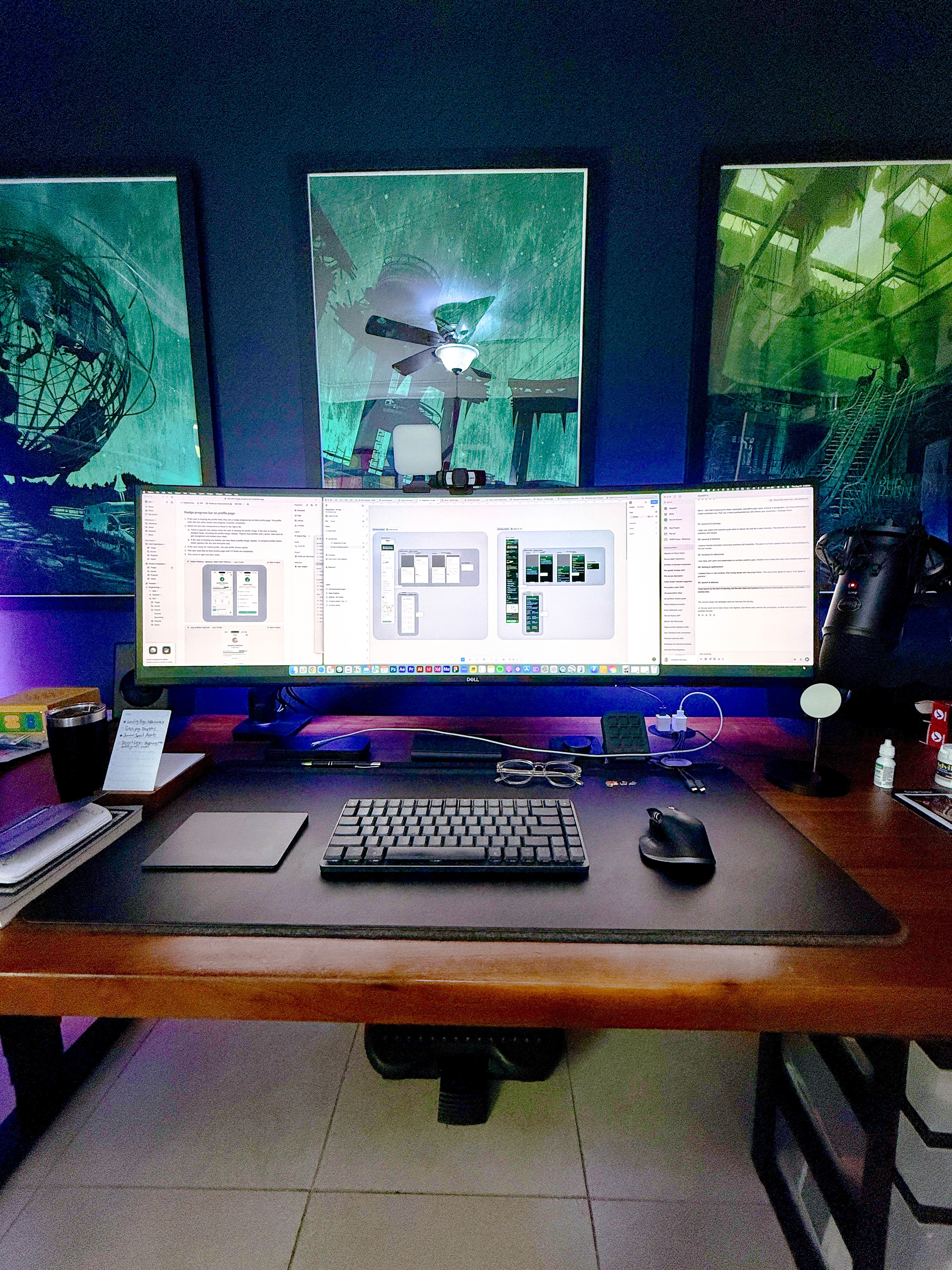
Discover. design. deliver.
My framework blends strategic foresight with design execution. Rooted in discovery, it aligns business goals, user needs, and cross-functional input to reduce risk and drive impact. Each phase builds toward not only usable products, but sustainable outcomes that scale.
01.
Research & Strategy
I align user needs with business goals early to reduce risk and set a clear direction. This ensures we’re solving the right problems with impact.
01.
Research & Strategy
I align user needs with business goals early to reduce risk and set a clear direction. This ensures we’re solving the right problems with impact.
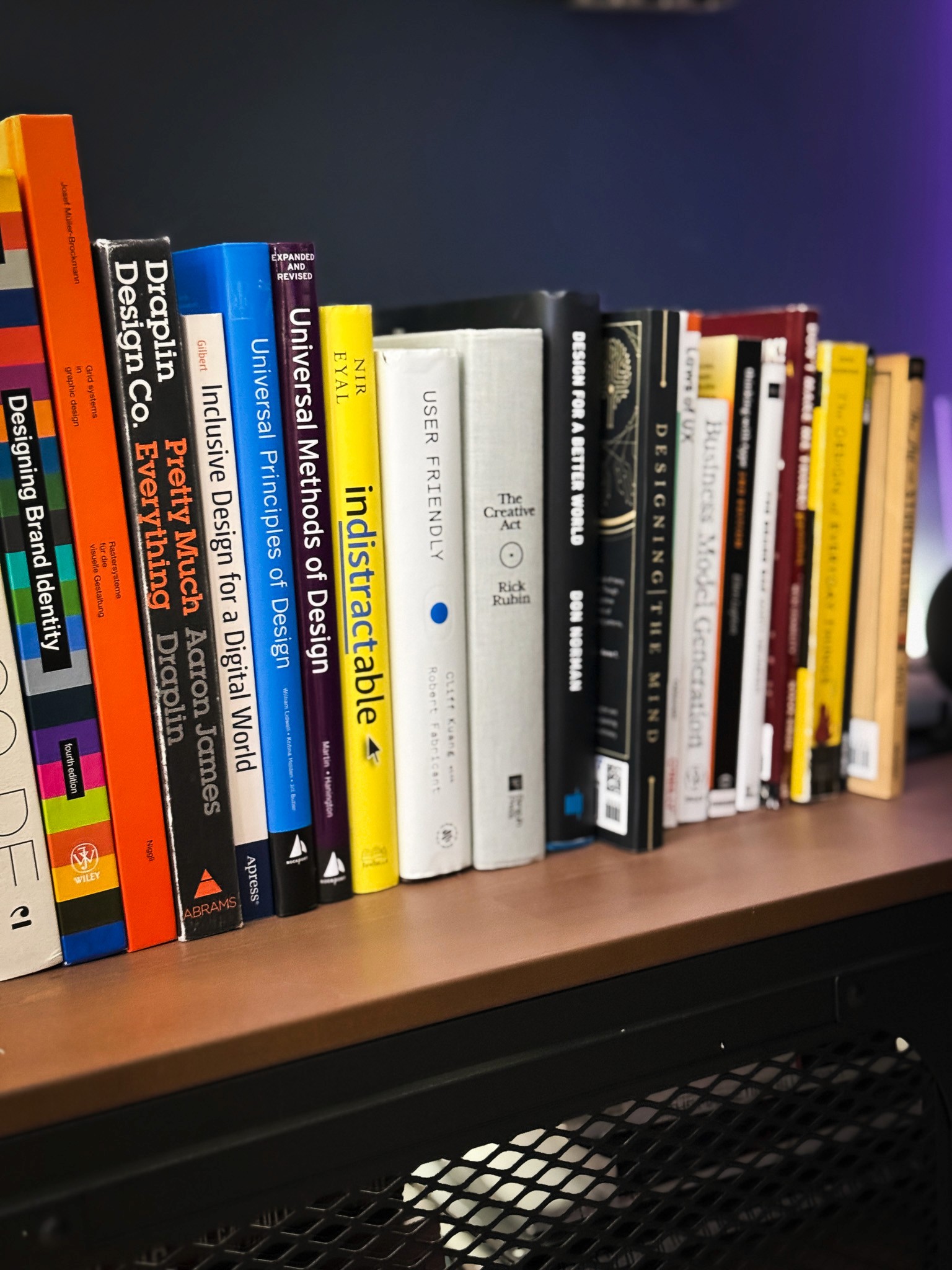
02.
Concept & Ideation
I explore multiple directions with vibe coding tools, balancing creativity with feasibility. The goal is to frame options that make sense strategically, not just visually.
02.
Concept & Ideation
I explore multiple directions with vibe coding tools, balancing creativity with feasibility. The goal is to frame options that make sense strategically, not just visually.
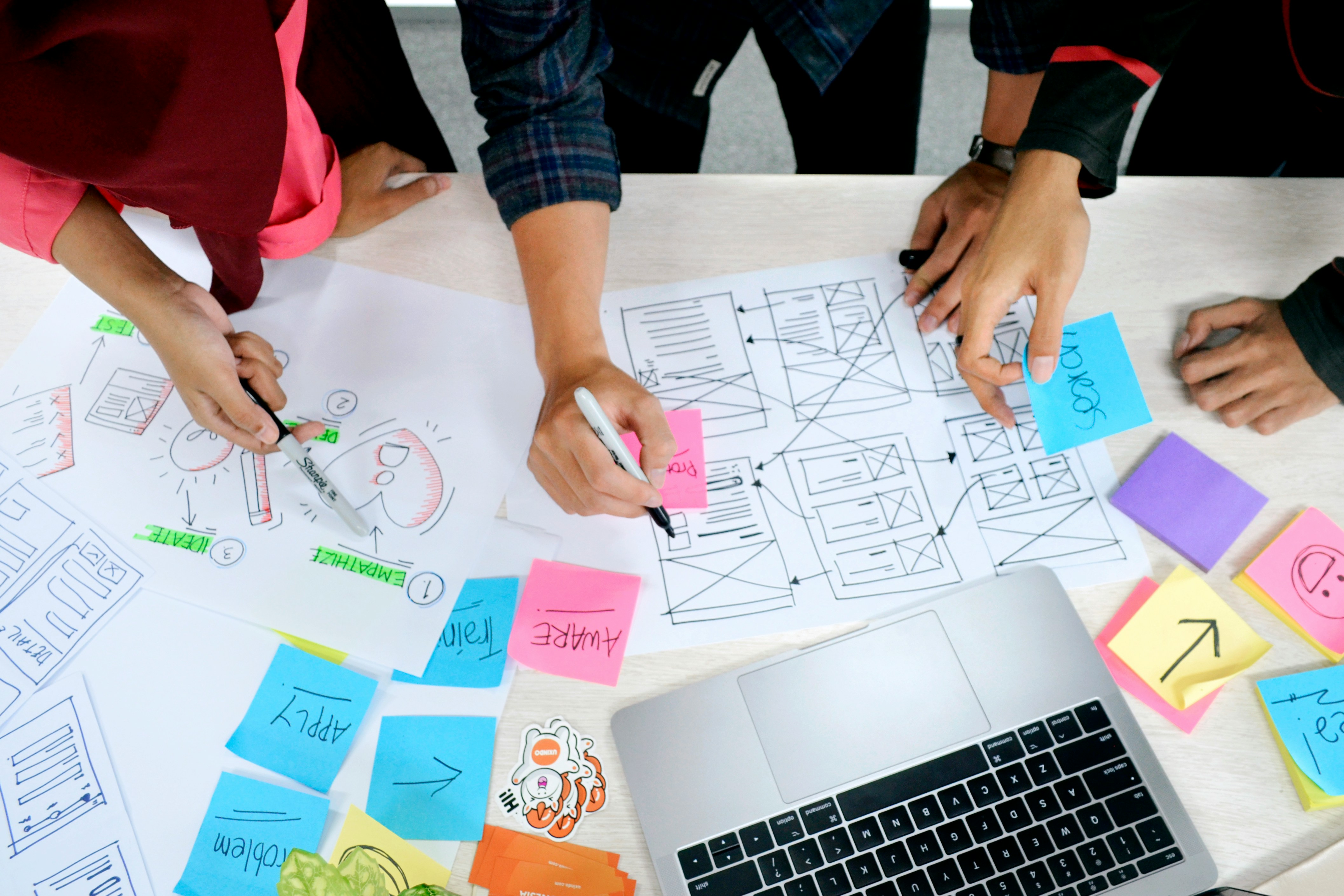
03.
Feedback & Refinement
I test ideas with users and stakeholders to surface usability gaps. Iteration here makes the work more intuitive and resilient.
03.
Feedback & Refinement
I test ideas with users and stakeholders to surface usability gaps. Iteration here makes the work more intuitive and resilient.
03.
Feedback & Refinement
I test ideas with users and stakeholders to surface usability gaps. Iteration here makes the work more intuitive and resilient.
04.
Testing & Optimization
I validate flows in real contexts, fine-tuning details and reducing friction. This step turns “good on paper” into “great in practice.”
04.
Testing & Optimization
I validate flows in real contexts, fine-tuning details and reducing friction. This step turns “good on paper” into “great in practice.”
04.
Testing & Optimization
I validate flows in real contexts, fine-tuning details and reducing friction. This step turns “good on paper” into “great in practice.”
05.
Launch & Delivery
I treat launch as the start of learning, not the end. Data and feedback loops inform what scales, what shifts, and what evolves next.
05.
Launch & Delivery
I treat launch as the start of learning, not the end. Data and feedback loops inform what scales, what shifts, and what evolves next.


Hi
Hi
Let's CONNECT
Whether it’s about UX strategy, product design, or sharing ideas, I’m always open to meaningful conversations.
About me
Jonathan montalvo "MOnty"
I’m a product designer who thrives between strategy and execution—shaping direction while staying deeply involved in the work. I’ve worked across startups and enterprise environments, helping teams navigate ambiguity and turn it into clear product decisions.
I’m known for my visual design craft and the ability to connect the dots across product, design, and engineering—bringing structure to complexity and creating forward momentum. My approach is hands-on, systems-minded, and focused on delivering outcomes that scale.
my approach to building products
From shaping the problem to shipping the solution, I focus on reducing risk, creating clarity, and helping teams move confidently from ambiguity to execution. My approach combines product thinking, systems design, close engineering collaboration, and AI-powered workflows to build high-quality products that can scale.
1. shape the problem & define direction
Shape problems around user needs, business goals, constraints, and opportunity
Surface assumptions early and pressure-test them before committing to solutions
Use AI and rapid exploration to expand possibilities and challenge initial thinking
Evaluate direction through value, usability, feasibility, and viability
2. explore solutions & test the thinking
Translate direction into flows, systems, interaction models, and prototypes
Explore multiple approaches before converging on a solution
Prototype quickly using design and AI-assisted workflows
Continuously refine based on insights, not opinions
3. shape with engineering & design for scale
Bring engineering into shaping early to understand feasibility and opportunity
Define behaviors, states, edge cases, constraints, and system logic together
Reduce ambiguity through clear, structured design decisions
Build reusable patterns that scale across products, platforms, and use cases
4. deliver with clarity & learn from what ships
Create clear product specs, behaviors, and acceptance criteria for execution
Maintain shared understanding across product, design, and engineering
Protect quality through iteration, feedback, and system consistency
Measure how solutions perform and use what we learn to improve them
1. shape the problem & define direction
Shape problems around user needs, business goals, constraints, and opportunity
Surface assumptions early and pressure-test them before committing to solutions
Use AI and rapid exploration to expand possibilities and challenge initial thinking
Evaluate direction through value, usability, feasibility, and viability
2. explore solutions & test the thinking
Translate direction into flows, systems, interaction models, and prototypes
Explore multiple approaches before converging on a solution
Prototype quickly using design and AI-assisted workflows
Continuously refine based on insights, not opinions
3. shape with engineering & design for scale
Bring engineering into shaping early to understand feasibility and opportunity
Define behaviors, states, edge cases, constraints, and system logic together
Reduce ambiguity through clear, structured design decisions
Build reusable patterns that scale across products, platforms, and use cases
4. deliver with clarity & learn from what ships
Create clear product specs, behaviors, and acceptance criteria for execution
Maintain shared understanding across product, design, and engineering
Protect quality through iteration, feedback, and system consistency
Measure how solutions perform and use what we learn to improve them
1. shape the problem & define direction
Shape problems around user needs, business goals, constraints, and opportunity
Surface assumptions early and pressure-test them before committing to solutions
Use AI and rapid exploration to expand possibilities and challenge initial thinking
Evaluate direction through value, usability, feasibility, and viability
2. explore solutions & test the thinking
Translate direction into flows, systems, interaction models, and prototypes
Explore multiple approaches before converging on a solution
Prototype quickly using design and AI-assisted workflows
Continuously refine based on insights, not opinions
3. shape with engineering & design for scale
Bring engineering into shaping early to understand feasibility and opportunity
Define behaviors, states, edge cases, constraints, and system logic together
Reduce ambiguity through clear, structured design decisions
Build reusable patterns that scale across products, platforms, and use cases
4. deliver with clarity & learn from what ships
Create clear product specs, behaviors, and acceptance criteria for execution
Maintain shared understanding across product, design, and engineering
Protect quality through iteration, feedback, and system consistency
Measure how solutions perform and use what we learn to improve them
Discover My Journey in Design
From agency work to enterprise, startups, and leadership, my path has been defined by a passion for purposeful design. Each role has deepened my ability to balance craft and strategy, preparing me to lead with vision while staying grounded in execution.
Principal Product Designer
Plei, Inc
2024 - Present
Principal Product Designer
Plei, Inc
2024 - Present
UX Manager | IC
Renaissance Learning
2022 - 2024
UX Manager | IC
Renaissance Learning
2022 - 2024
Senior UX Designer
PwC
2021 - 2022
Senior UX Designer
PwC
2021 - 2022
Product Designer
Wrecking Ball Studios
2020 - 2021
Product Designer
Wrecking Ball Studios
2020 - 2021
Senior UI Designer
Citrix
2019 - 2020
Senior UI Designer
Citrix
2019 - 2020
Senior Design Specialist
CBRE
2016 - 2019
Senior Design Specialist
CBRE
2016 - 2019
My Tech Stack
Just a few of the tools that support how I think, design, and scale—from discovery to delivery.
Figma
My central hub for design—where I build interfaces, create design systems, and collaborate with teams. From FigJam workshops to FigmaMake prototypes, it’s where ideas move from concepts to clickable experiences.
Linear
My project command center. Linear keeps product, UX, and engineering in sync—writing tickets, tracking progress, streamlining workflows, and keeping discovery and delivery connected without friction.
ChatGPT
My on-demand thought partner for research, writing, and ideation. My custom GPTs help me move faster while sharpening clarity and creativity.
Claude
I use Claude alongside Figma MCP and terminal-based workflows leveraging custom markdown files to turn prompts into working prototypes leveraging existing design systems to move from idea to build-ready concepts quickly.
Mixpanel
My analytics engine for tracking product usage, user behavior, and funnels—helping me uncover patterns, measure adoption, and validate design decisions with data.
GreatQuestion
My research backbone for unmoderated studies. Great Question powers card sorting, usability tests, and survey distribution—helping me validate mental models and flows quickly while keeping logistics light.
Buildbetter
My team’s knowledge vault. Buildbetter records, transcribes, and organizes meetings and user sessions—turning conversations into searchable insights that keep research and product aligned.
After Effects
For motion and interaction concepts, turning static designs into compelling animated stories. I also create Lottie animations for lightweight scalable motion assets that integrate seamlessly into apps and websites.
Discover. design. deliver.
My framework blends strategic foresight with design execution. Rooted in discovery, it aligns business goals, user needs, and cross-functional input to reduce risk and drive impact. Each phase builds toward not only usable products, but sustainable outcomes that scale.
01.
Research & Strategy
I align user needs with business goals early to reduce risk and set a clear direction. This ensures we’re solving the right problems with impact.
01.
Research & Strategy
I align user needs with business goals early to reduce risk and set a clear direction. This ensures we’re solving the right problems with impact.
02.
Concept & Ideation
I explore multiple directions with vibe coding tools, balancing creativity with feasibility. The goal is to frame options that make sense strategically, not just visually.
02.
Concept & Ideation
I explore multiple directions with vibe coding tools, balancing creativity with feasibility. The goal is to frame options that make sense strategically, not just visually.
03.
Feedback & Refinement
I test ideas with users and stakeholders to surface usability gaps. Iteration here makes the work more intuitive and resilient.
03.
Feedback & Refinement
I test ideas with users and stakeholders to surface usability gaps. Iteration here makes the work more intuitive and resilient.
03.
Feedback & Refinement
I test ideas with users and stakeholders to surface usability gaps. Iteration here makes the work more intuitive and resilient.
04.
Testing & Optimization
I validate flows in real contexts, fine-tuning details and reducing friction. This step turns “good on paper” into “great in practice.”
04.
Testing & Optimization
I validate flows in real contexts, fine-tuning details and reducing friction. This step turns “good on paper” into “great in practice.”
04.
Testing & Optimization
I validate flows in real contexts, fine-tuning details and reducing friction. This step turns “good on paper” into “great in practice.”
05.
Launch & Delivery
I treat launch as the start of learning, not the end. Data and feedback loops inform what scales, what shifts, and what evolves next.
05.
Launch & Delivery
I treat launch as the start of learning, not the end. Data and feedback loops inform what scales, what shifts, and what evolves next.
Hi
Hi
Let's CONNECT
Whether it’s about UX strategy, product design, or sharing ideas, I’m always open to meaningful conversations.
About me
Jonathan montalvo "MOnty"
I’m a product designer who thrives between strategy and execution—shaping direction while staying deeply involved in the work. I’ve worked across startups and enterprise environments, helping teams navigate ambiguity and turn it into clear product decisions.
I’m known for my visual design craft and the ability to connect the dots across product, design, and engineering—bringing structure to complexity and creating forward momentum. My approach is hands-on, systems-minded, and focused on delivering outcomes that scale.
my approach to building products
From shaping the problem to shipping the solution, I focus on reducing risk, creating clarity, and helping teams move confidently from ambiguity to execution. My approach combines product thinking, systems design, close engineering collaboration, and AI-powered workflows to build high-quality products that can scale.
1. shape the problem & define direction
Shape problems around user needs, business goals, constraints, and opportunity
Surface assumptions early and pressure-test them before committing to solutions
Use AI and rapid exploration to expand possibilities and challenge initial thinking
Evaluate direction through value, usability, feasibility, and viability
2. explore solutions & test the thinking
Translate direction into flows, systems, interaction models, and prototypes
Explore multiple approaches before converging on a solution
Prototype quickly using design and AI-assisted workflows
Continuously refine based on insights, not opinions
3. shape with engineering & design for scale
Bring engineering into shaping early to understand feasibility and opportunity
Define behaviors, states, edge cases, constraints, and system logic together
Reduce ambiguity through clear, structured design decisions
Build reusable patterns that scale across products, platforms, and use cases
4. deliver with clarity & learn from what ships
Create clear product specs, behaviors, and acceptance criteria for execution
Maintain shared understanding across product, design, and engineering
Protect quality through iteration, feedback, and system consistency
Measure how solutions perform and use what we learn to improve them
1. shape the problem & define direction
Shape problems around user needs, business goals, constraints, and opportunity
Surface assumptions early and pressure-test them before committing to solutions
Use AI and rapid exploration to expand possibilities and challenge initial thinking
Evaluate direction through value, usability, feasibility, and viability
2. explore solutions & test the thinking
Translate direction into flows, systems, interaction models, and prototypes
Explore multiple approaches before converging on a solution
Prototype quickly using design and AI-assisted workflows
Continuously refine based on insights, not opinions
3. shape with engineering & design for scale
Bring engineering into shaping early to understand feasibility and opportunity
Define behaviors, states, edge cases, constraints, and system logic together
Reduce ambiguity through clear, structured design decisions
Build reusable patterns that scale across products, platforms, and use cases
4. deliver with clarity & learn from what ships
Create clear product specs, behaviors, and acceptance criteria for execution
Maintain shared understanding across product, design, and engineering
Protect quality through iteration, feedback, and system consistency
Measure how solutions perform and use what we learn to improve them
1. shape the problem & define direction
Shape problems around user needs, business goals, constraints, and opportunity
Surface assumptions early and pressure-test them before committing to solutions
Use AI and rapid exploration to expand possibilities and challenge initial thinking
Evaluate direction through value, usability, feasibility, and viability
2. explore solutions & test the thinking
Translate direction into flows, systems, interaction models, and prototypes
Explore multiple approaches before converging on a solution
Prototype quickly using design and AI-assisted workflows
Continuously refine based on insights, not opinions
3. shape with engineering & design for scale
Bring engineering into shaping early to understand feasibility and opportunity
Define behaviors, states, edge cases, constraints, and system logic together
Reduce ambiguity through clear, structured design decisions
Build reusable patterns that scale across products, platforms, and use cases
4. deliver with clarity & learn from what ships
Create clear product specs, behaviors, and acceptance criteria for execution
Maintain shared understanding across product, design, and engineering
Protect quality through iteration, feedback, and system consistency
Measure how solutions perform and use what we learn to improve them
Discover My Journey in Design
From agency work to enterprise, startups, and leadership, my path has been defined by a passion for purposeful design. Each role has deepened my ability to balance craft and strategy, preparing me to lead with vision while staying grounded in execution.
Principal Product Designer
Plei, Inc
2024 - Present
Principal Product Designer
Plei, Inc
2024 - Present
UX Manager | IC
Renaissance Learning
2022 - 2024
UX Manager | IC
Renaissance Learning
2022 - 2024
Senior UX Designer
PwC
2021 - 2022
Senior UX Designer
PwC
2021 - 2022
Product Designer
Wrecking Ball Studios
2020 - 2021
Product Designer
Wrecking Ball Studios
2020 - 2021
Senior UI Designer
Citrix
2019 - 2020
Senior UI Designer
Citrix
2019 - 2020
Senior Design Specialist
CBRE
2016 - 2019
Senior Design Specialist
CBRE
2016 - 2019
My Tech Stack
Just a few of the tools that support how I think, design, and scale—from discovery to delivery.
Figma
My central hub for design—where I build interfaces, create design systems, and collaborate with teams. From FigJam workshops to FigmaMake prototypes, it’s where ideas move from concepts to clickable experiences.
Linear
My project command center. Linear keeps product, UX, and engineering in sync—writing tickets, tracking progress, streamlining workflows, and keeping discovery and delivery connected without friction.
ChatGPT
My on-demand thought partner for research, writing, and ideation. My custom GPTs help me move faster while sharpening clarity and creativity.
Claude
I use Claude alongside Figma MCP and terminal-based workflows leveraging custom markdown files to turn prompts into working prototypes leveraging existing design systems to move from idea to build-ready concepts quickly.
Mixpanel
My analytics engine for tracking product usage, user behavior, and funnels—helping me uncover patterns, measure adoption, and validate design decisions with data.
GreatQuestion
My research backbone for unmoderated studies. Great Question powers card sorting, usability tests, and survey distribution—helping me validate mental models and flows quickly while keeping logistics light.
Buildbetter
My team’s knowledge vault. Buildbetter records, transcribes, and organizes meetings and user sessions—turning conversations into searchable insights that keep research and product aligned.
After Effects
For motion and interaction concepts, turning static designs into compelling animated stories. I also create Lottie animations for lightweight scalable motion assets that integrate seamlessly into apps and websites.
Discover. design. deliver.
My framework blends strategic foresight with design execution. Rooted in discovery, it aligns business goals, user needs, and cross-functional input to reduce risk and drive impact. Each phase builds toward not only usable products, but sustainable outcomes that scale.
01.
Research & Strategy
I align user needs with business goals early to reduce risk and set a clear direction. This ensures we’re solving the right problems with impact.
01.
Research & Strategy
I align user needs with business goals early to reduce risk and set a clear direction. This ensures we’re solving the right problems with impact.
02.
Concept & Ideation
I explore multiple directions with vibe coding tools, balancing creativity with feasibility. The goal is to frame options that make sense strategically, not just visually.
02.
Concept & Ideation
I explore multiple directions with vibe coding tools, balancing creativity with feasibility. The goal is to frame options that make sense strategically, not just visually.
03.
Feedback & Refinement
I test ideas with users and stakeholders to surface usability gaps. Iteration here makes the work more intuitive and resilient.
03.
Feedback & Refinement
I test ideas with users and stakeholders to surface usability gaps. Iteration here makes the work more intuitive and resilient.
03.
Feedback & Refinement
I test ideas with users and stakeholders to surface usability gaps. Iteration here makes the work more intuitive and resilient.
04.
Testing & Optimization
I validate flows in real contexts, fine-tuning details and reducing friction. This step turns “good on paper” into “great in practice.”
04.
Testing & Optimization
I validate flows in real contexts, fine-tuning details and reducing friction. This step turns “good on paper” into “great in practice.”
04.
Testing & Optimization
I validate flows in real contexts, fine-tuning details and reducing friction. This step turns “good on paper” into “great in practice.”
05.
Launch & Delivery
I treat launch as the start of learning, not the end. Data and feedback loops inform what scales, what shifts, and what evolves next.
05.
Launch & Delivery
I treat launch as the start of learning, not the end. Data and feedback loops inform what scales, what shifts, and what evolves next.
Hi
Hi
Let's CONNECT
Whether it’s about UX strategy, product design, or sharing ideas, I’m always open to meaningful conversations.