
- Sports tech
- Product Strategy
Designing the blueprint for a connected youth sports platform
A discovery and strategy sprint that mapped MADE Hoops’ complex product ecosystem and created the foundation for its rebuild.
- Year
- 2025
- Industry
- Sports tech
- Company
- MADE Hoops
- Role
- Product Strategist
- Capabilities
- Product strategy, Journey mapping, Wireframing
Problem
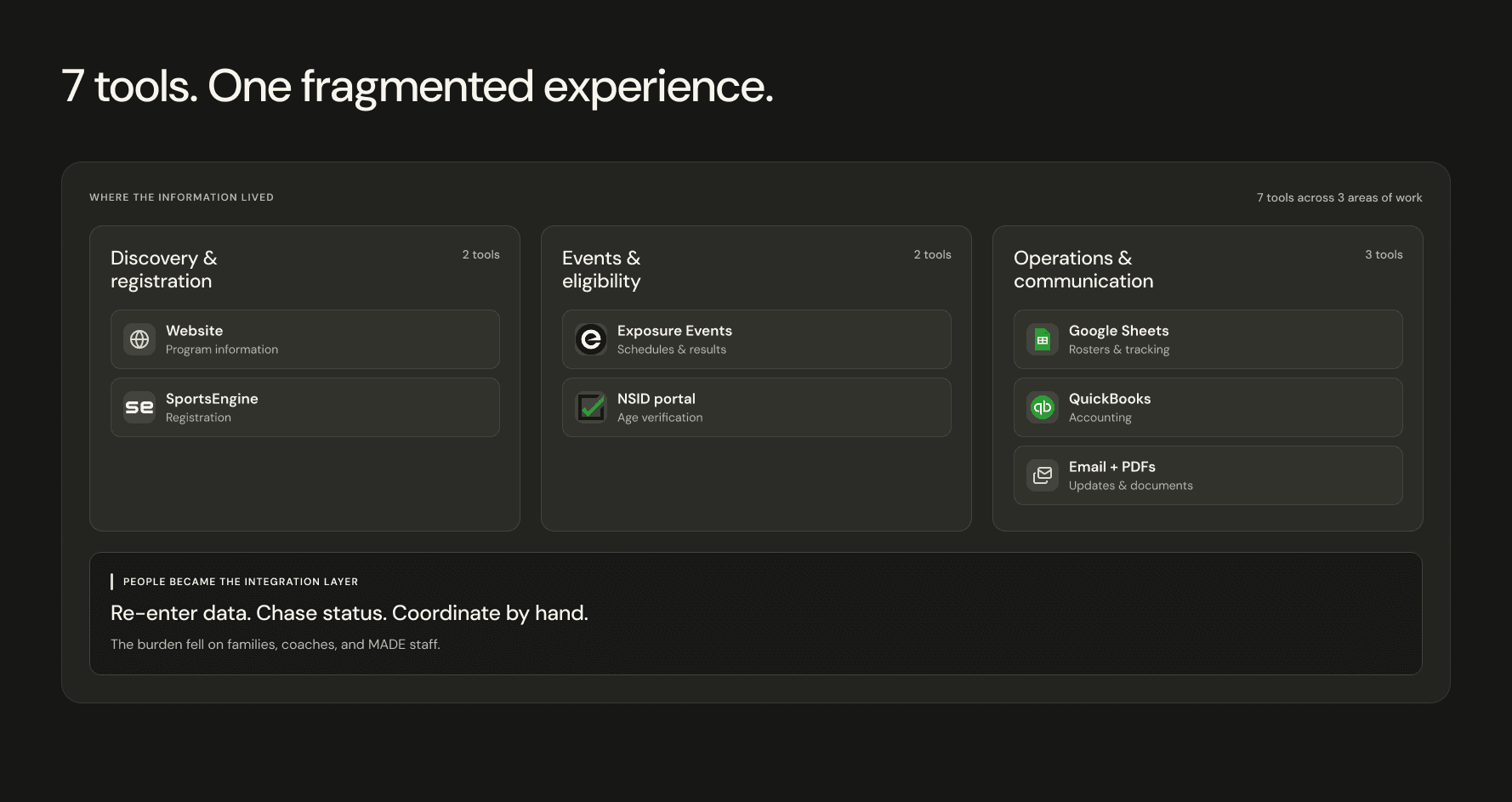
MADE Hoops had outgrown the tools powering its events. Registration, rosters, payments, scheduling, waivers, and communication were spread across disconnected platforms and manual workflows.
Parents lacked clarity, coaches chased missing information, and administrators relied on spreadsheets to keep everything moving.
- Fragmented ecosystem: Registration, eligibility, and payments lived in separate tools. Families and staff had to bridge the gaps between systems. No shared view showed a player’s complete registration status.
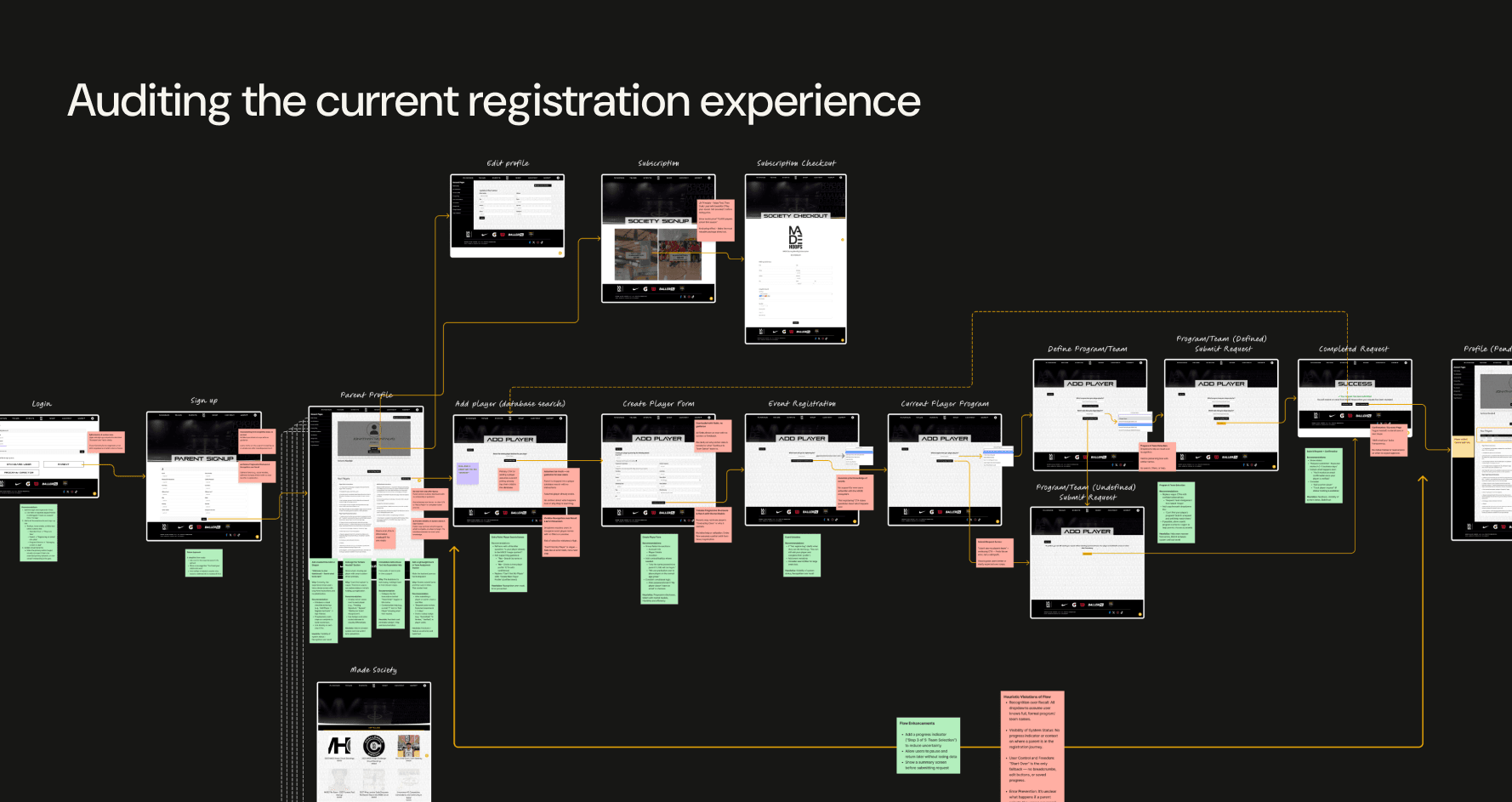
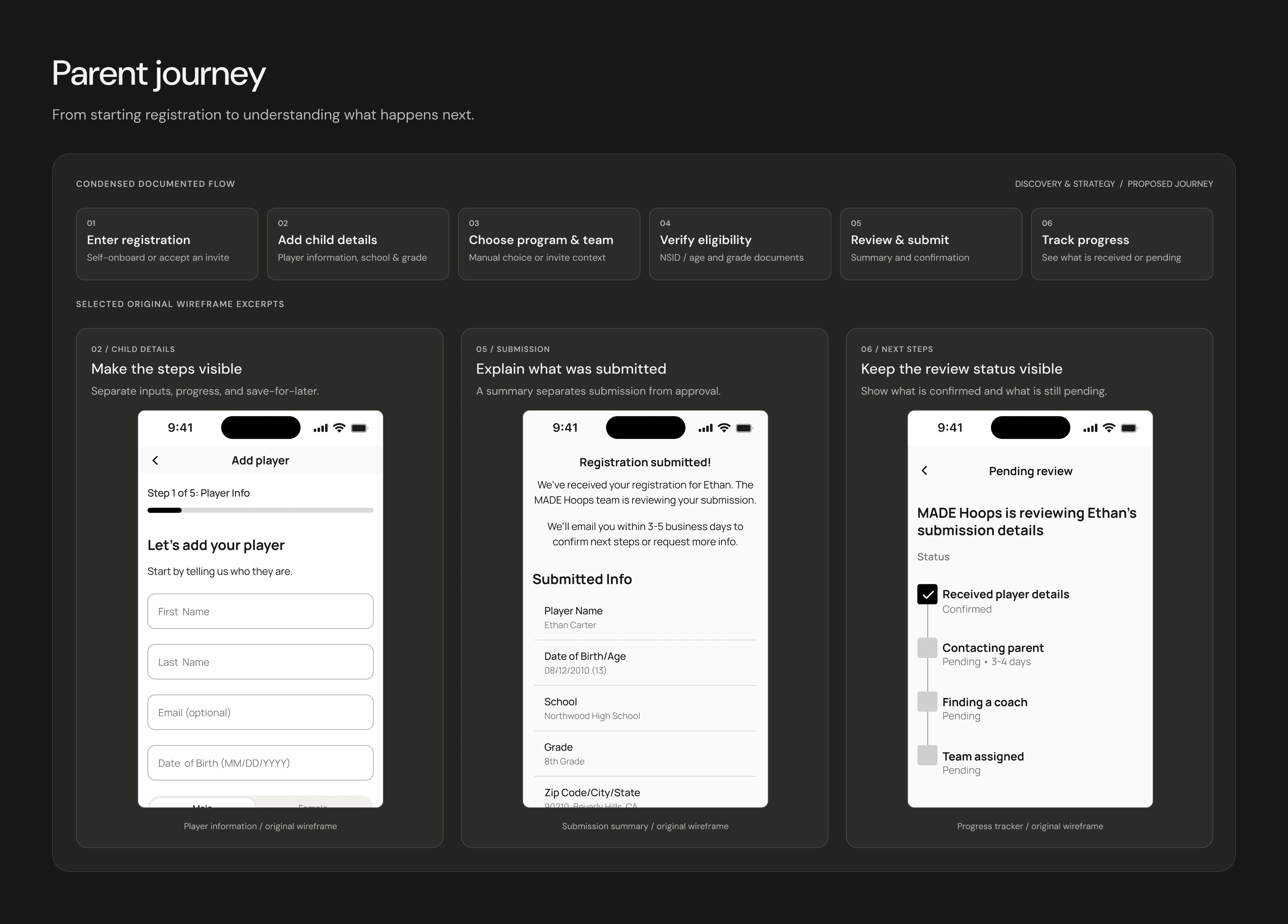
- Parent registration: A branching journey made registration difficult to follow. Limited progress feedback left parents unsure what was complete or still required. Few opportunities to review or change selections without retracing steps.
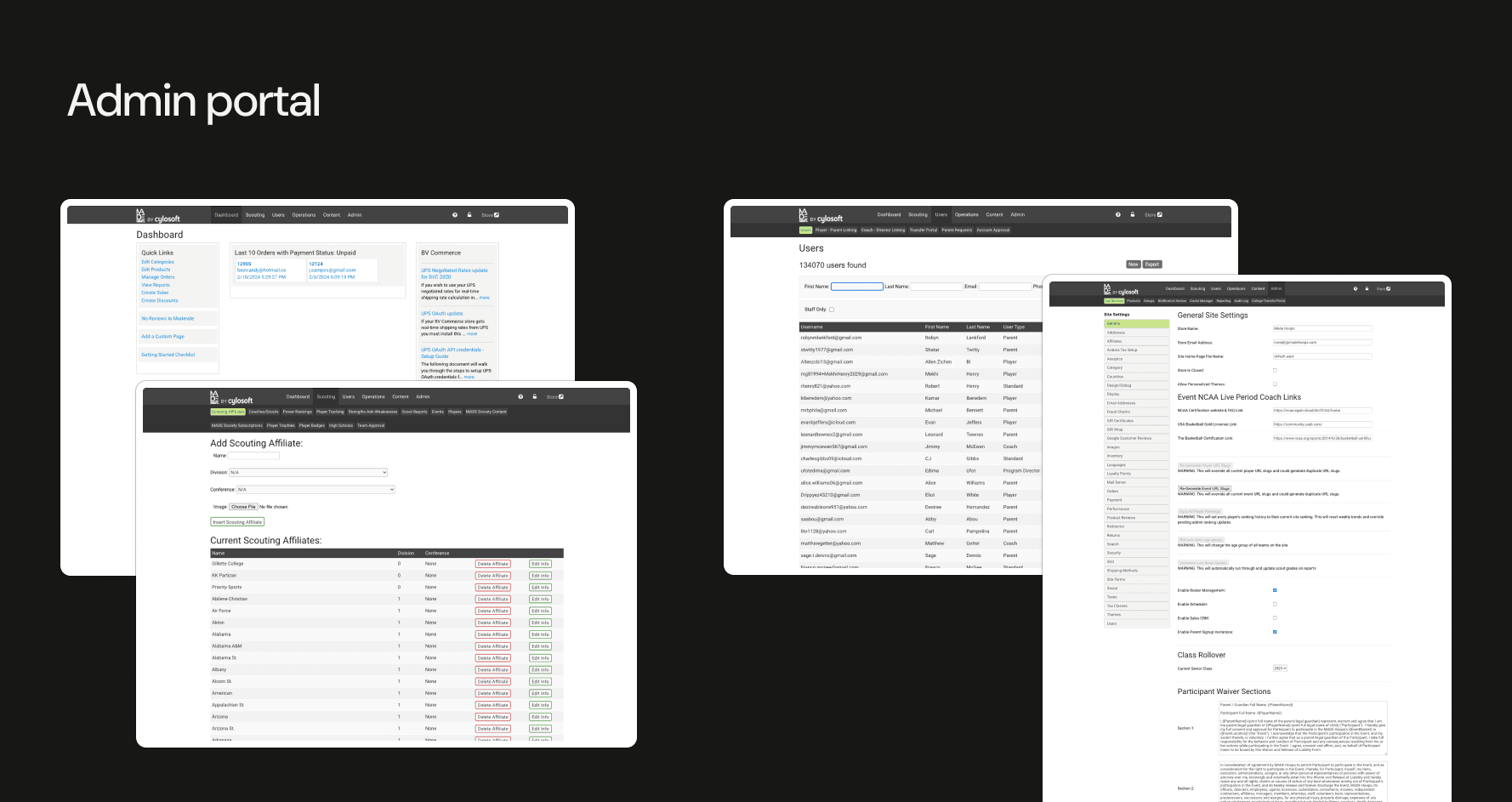
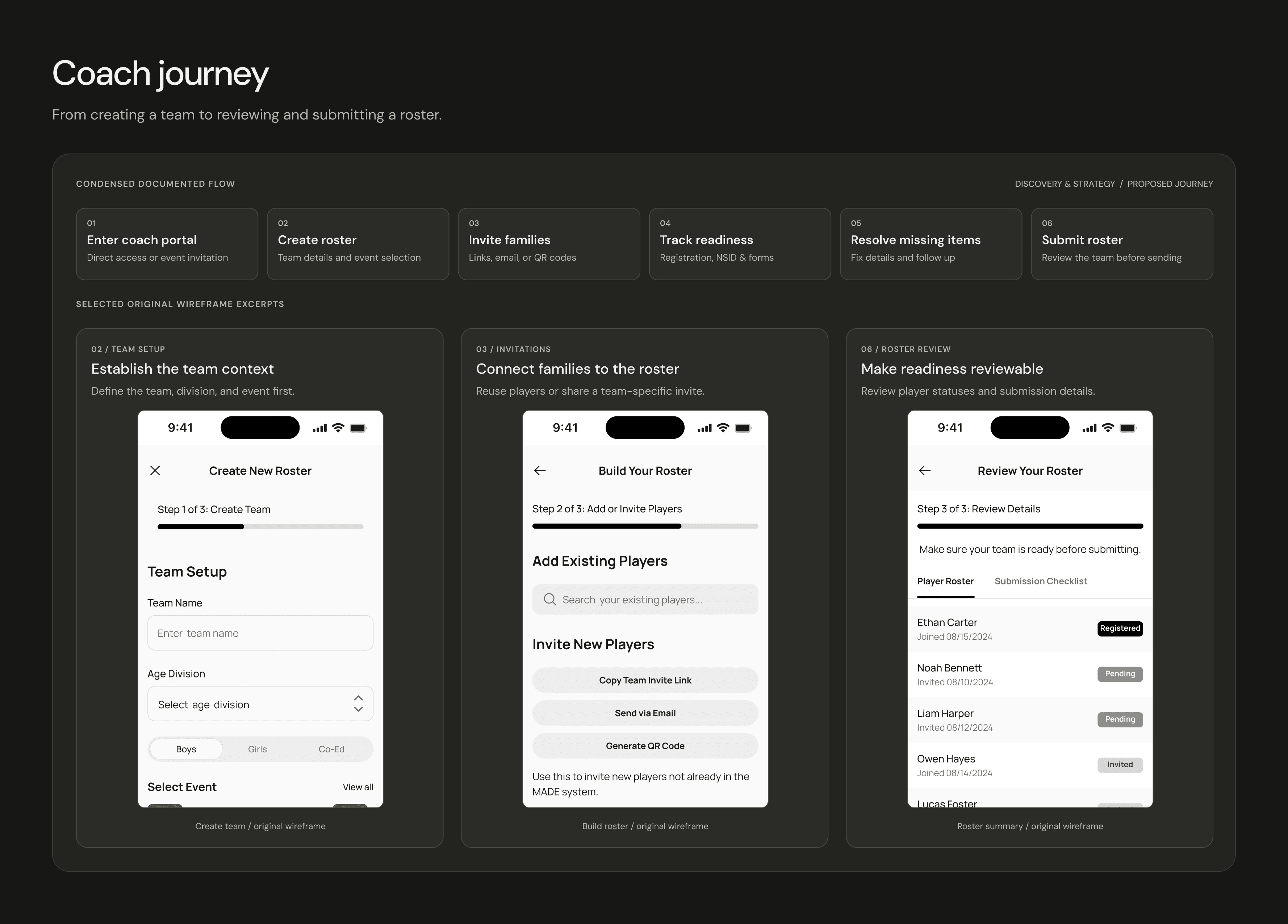
- Admin portal: A generic dashboard gave MADE staff no view tailored to their responsibilities. Tools were scattered across categories and navigation levels, leaving users to find their own starting point. Long lists and dense forms increased cognitive load during everyday tasks.
Solution
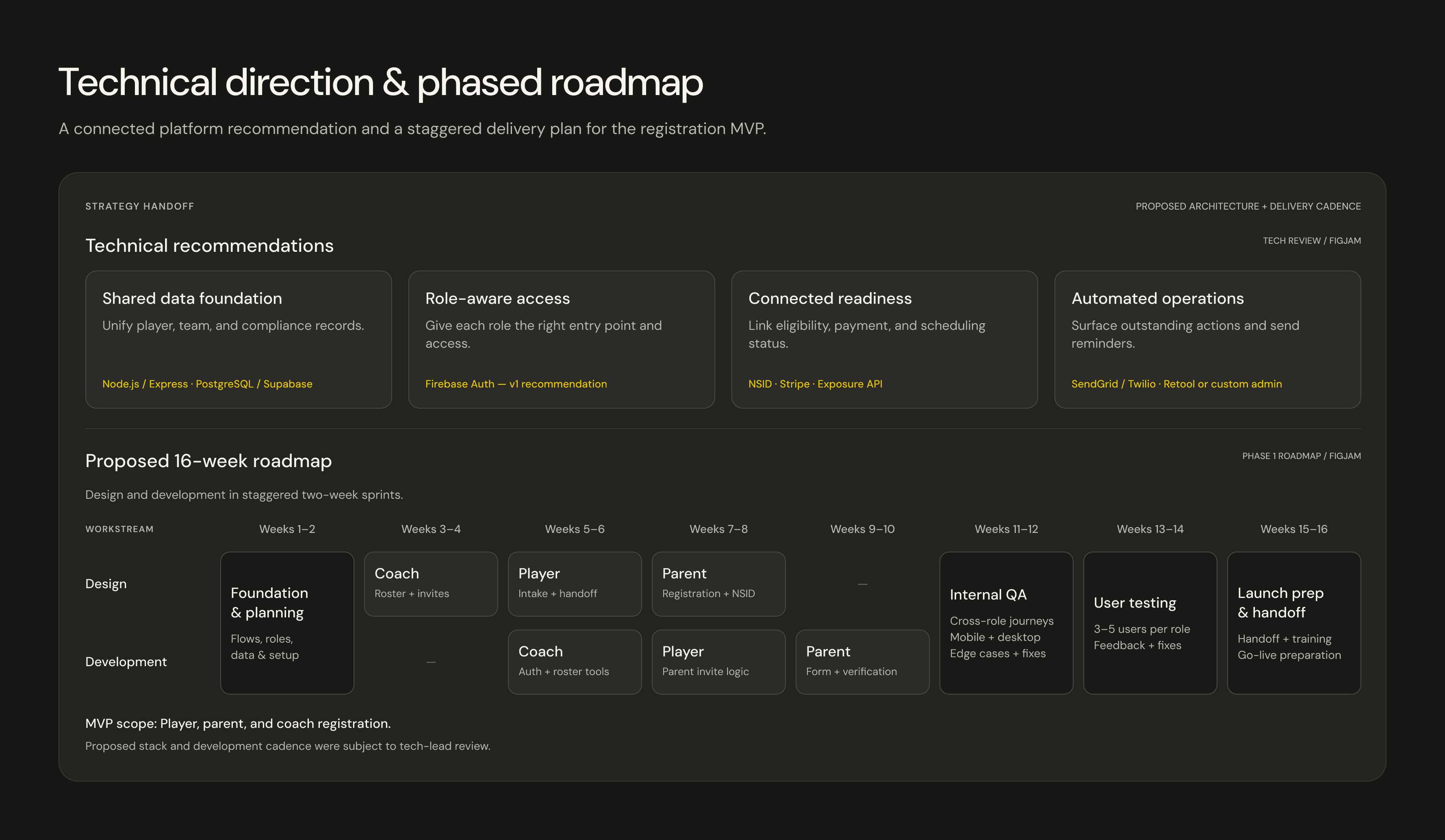
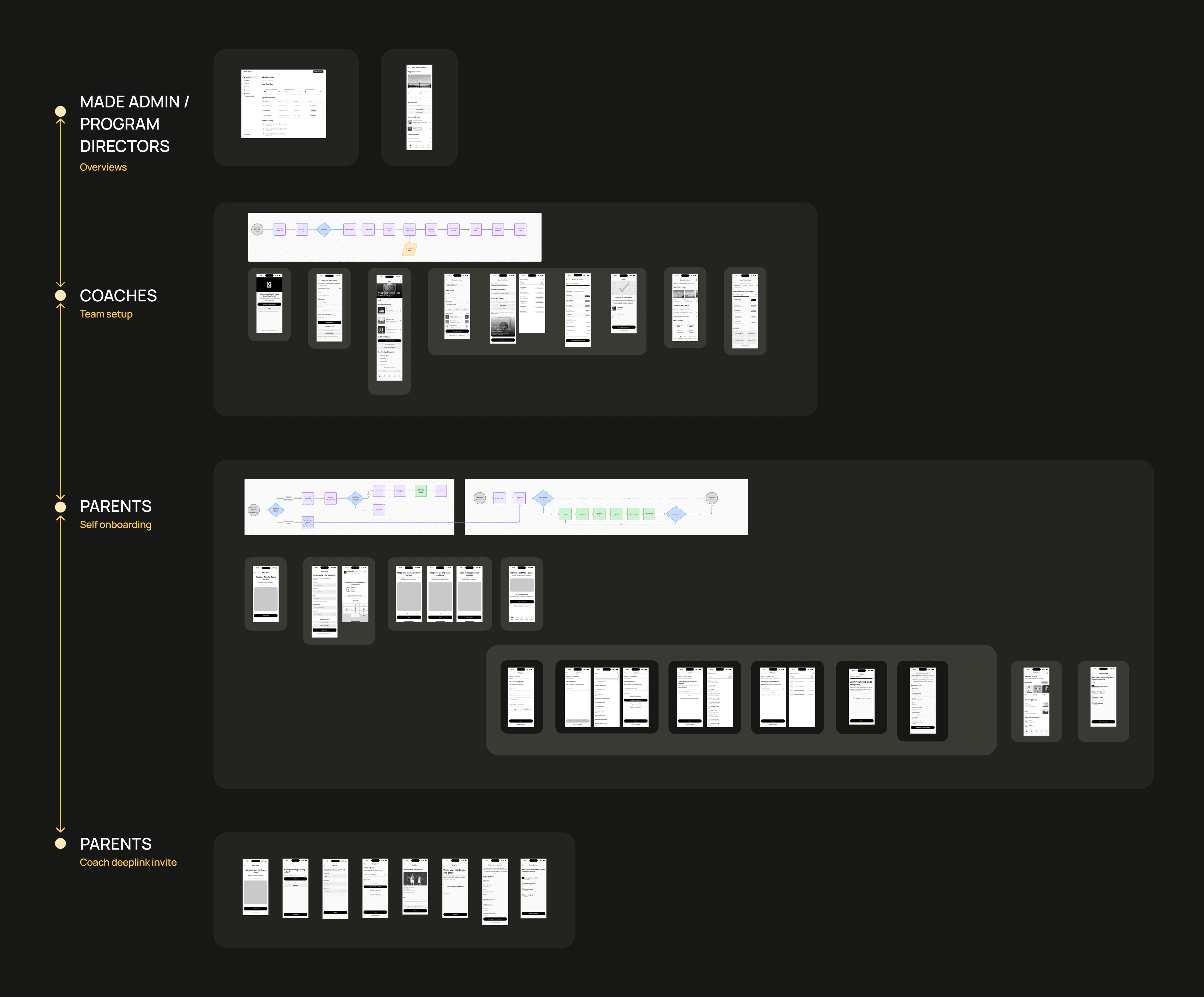
Working as a two-person design team with Wheelhouse, we recommended a shared data foundation with workflows tailored to each role. We prioritized registration because it connected parent, player, and coach needs in one essential journey.
Our priorities were to:
- Connect player, team, and eligibility information to reduce duplicate entry and conflicting statuses.
- Give each role the information and actions relevant to their responsibilities.
- Prioritize registration for the MVP, where parent, player, and coach workflows intersect.
We documented this direction through role-based feature definitions, journeys, wireframes, technical recommendations, and a phased roadmap for Wheelhouse’s next stage of design and development.
Challenge
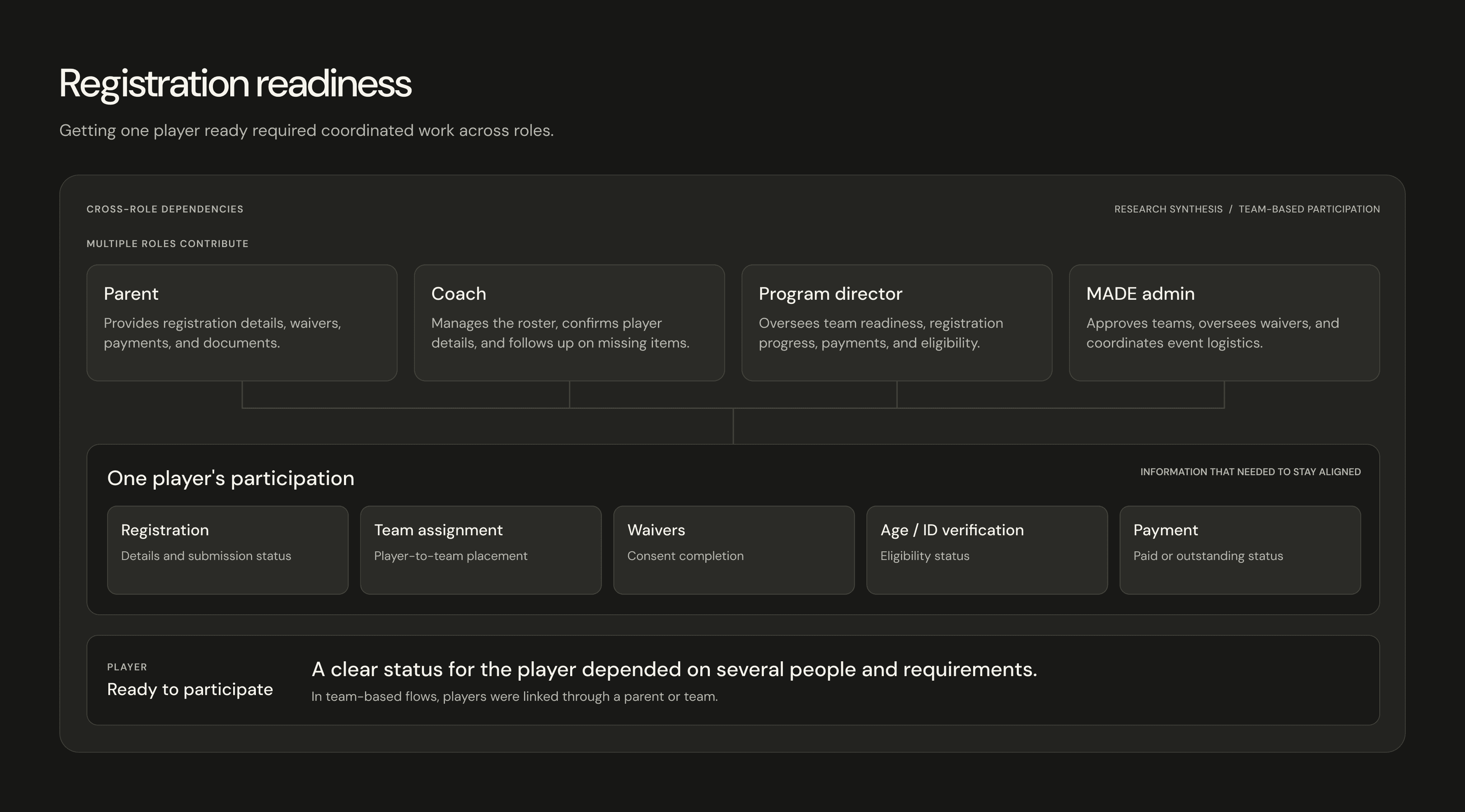
The challenge was defining who could act, what each role could control, and when a player was ready to participate.
- Visibility versus control: We proposed giving program directors oversight across teams while reserving event creation and team approvals for MADE admins.
- Player independence versus parental responsibility: Let under-18 players begin intake, then hand registration completion and consent to a parent.
- Progress versus readiness: Distinguish a submitted registration from eligibility to play, keeping outstanding waivers, verification, and payment visible to families, coaches, and staff.
Outcome
After our handoff, MADE’s decision to own its data reshaped the implementation priorities. Wheelhouse built a custom data hub and responsive web environments, preserving the on-the-go access we had envisioned through a mobile app.
Our work informed UX direction, role definitions, journeys, user flows, and features as the scope evolved.
Our strategy carried forward in:
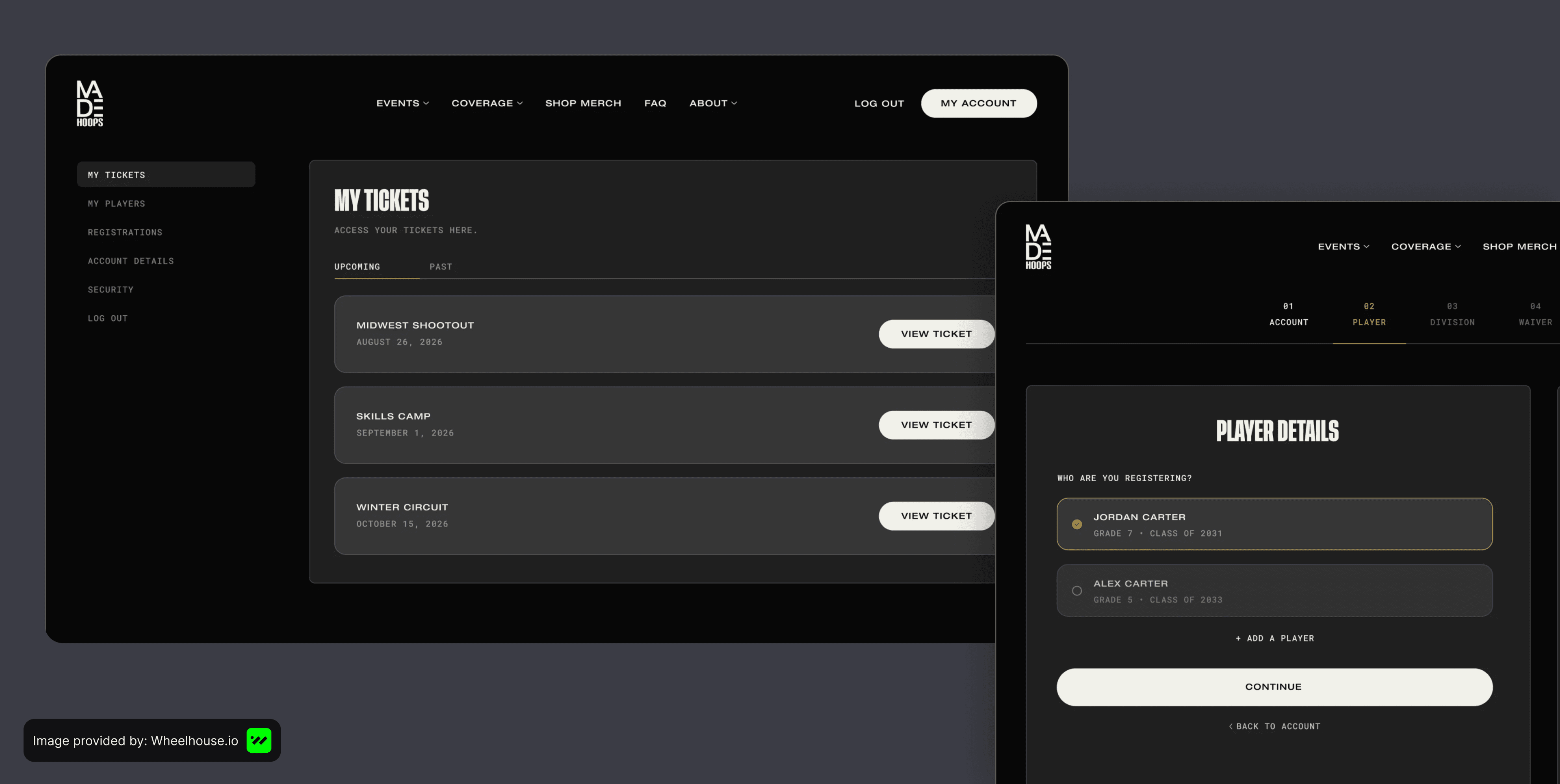
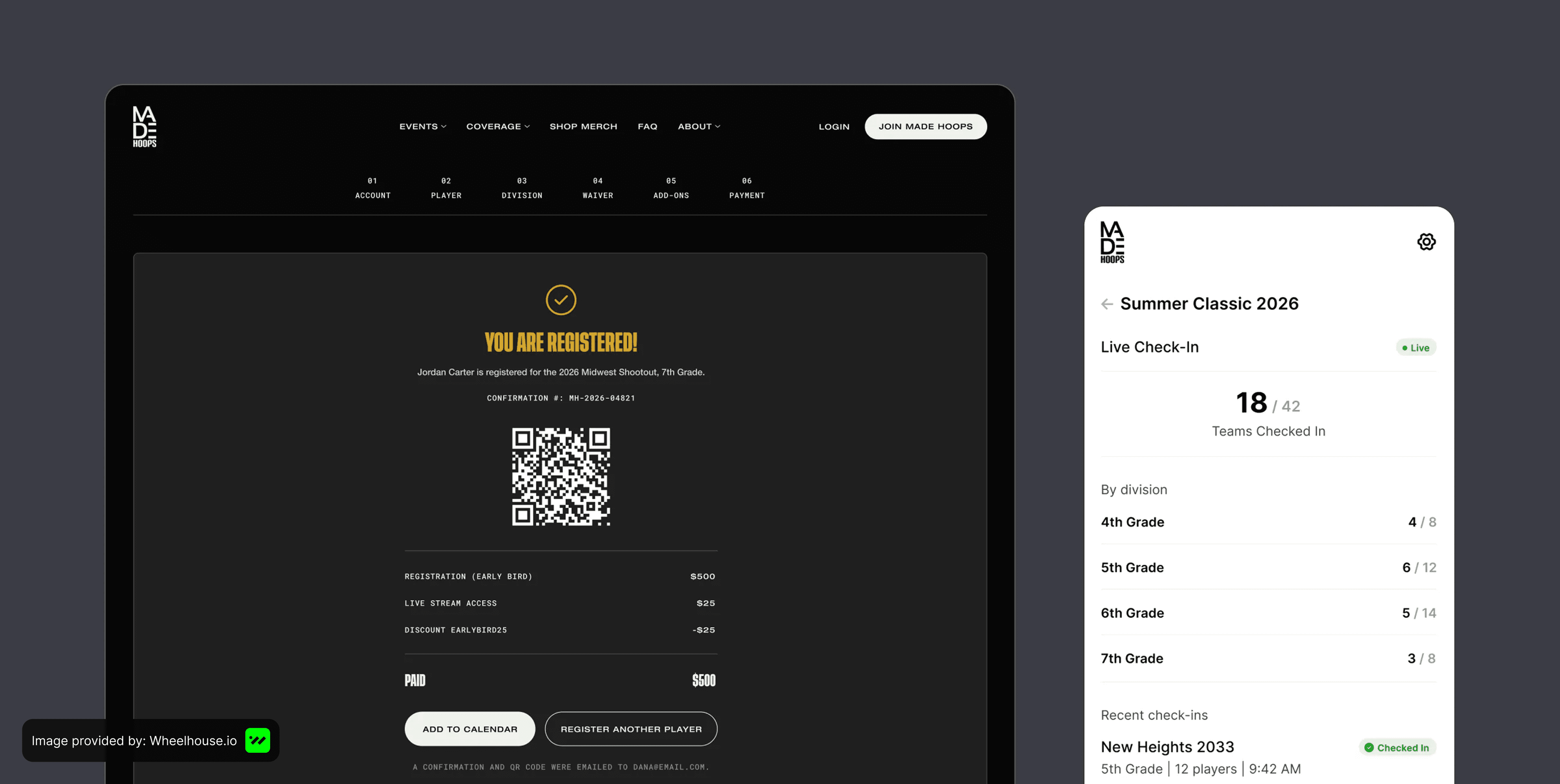
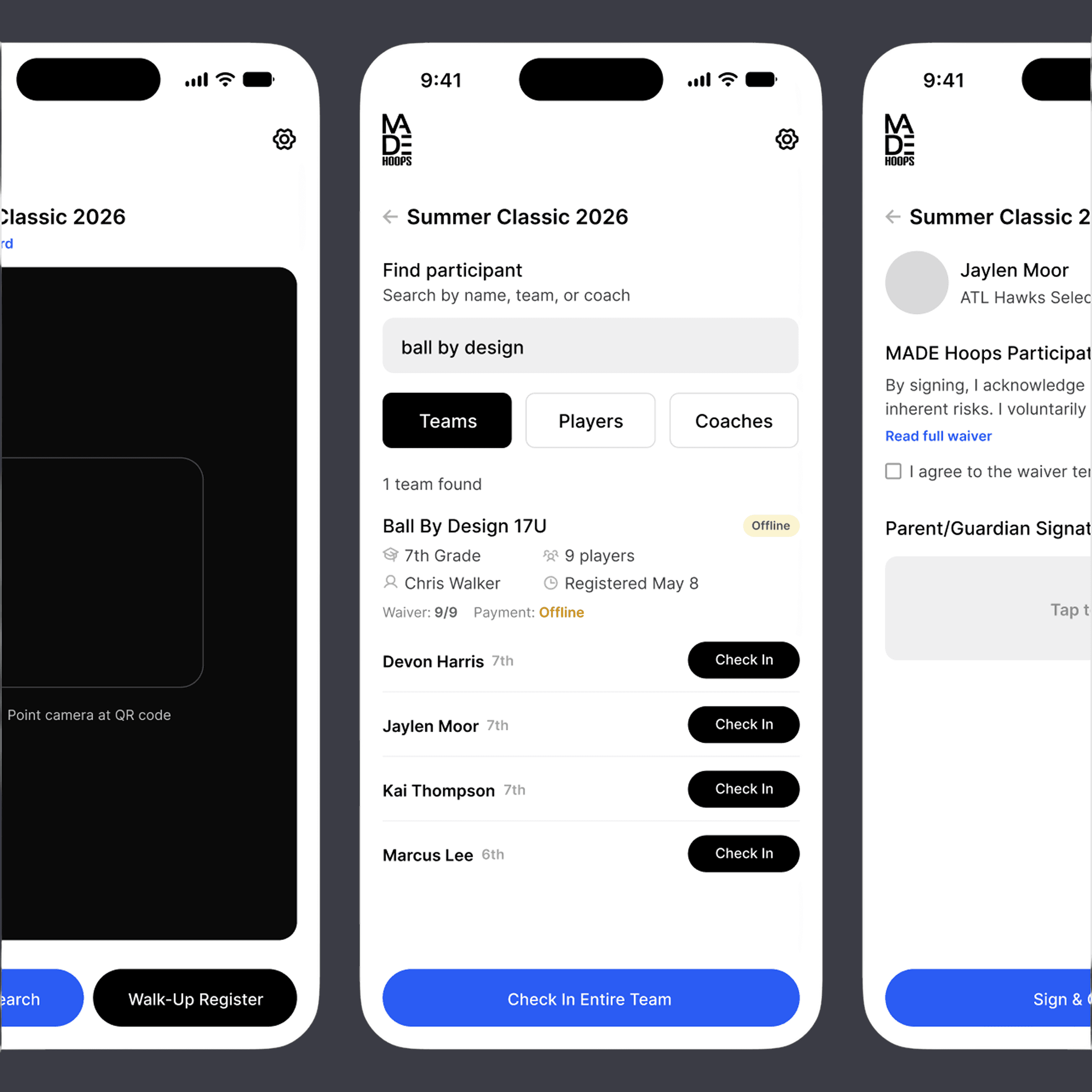
- Registration and player management: Guided steps, selecting existing player details, submission review, progress tracking, and QR check-in.
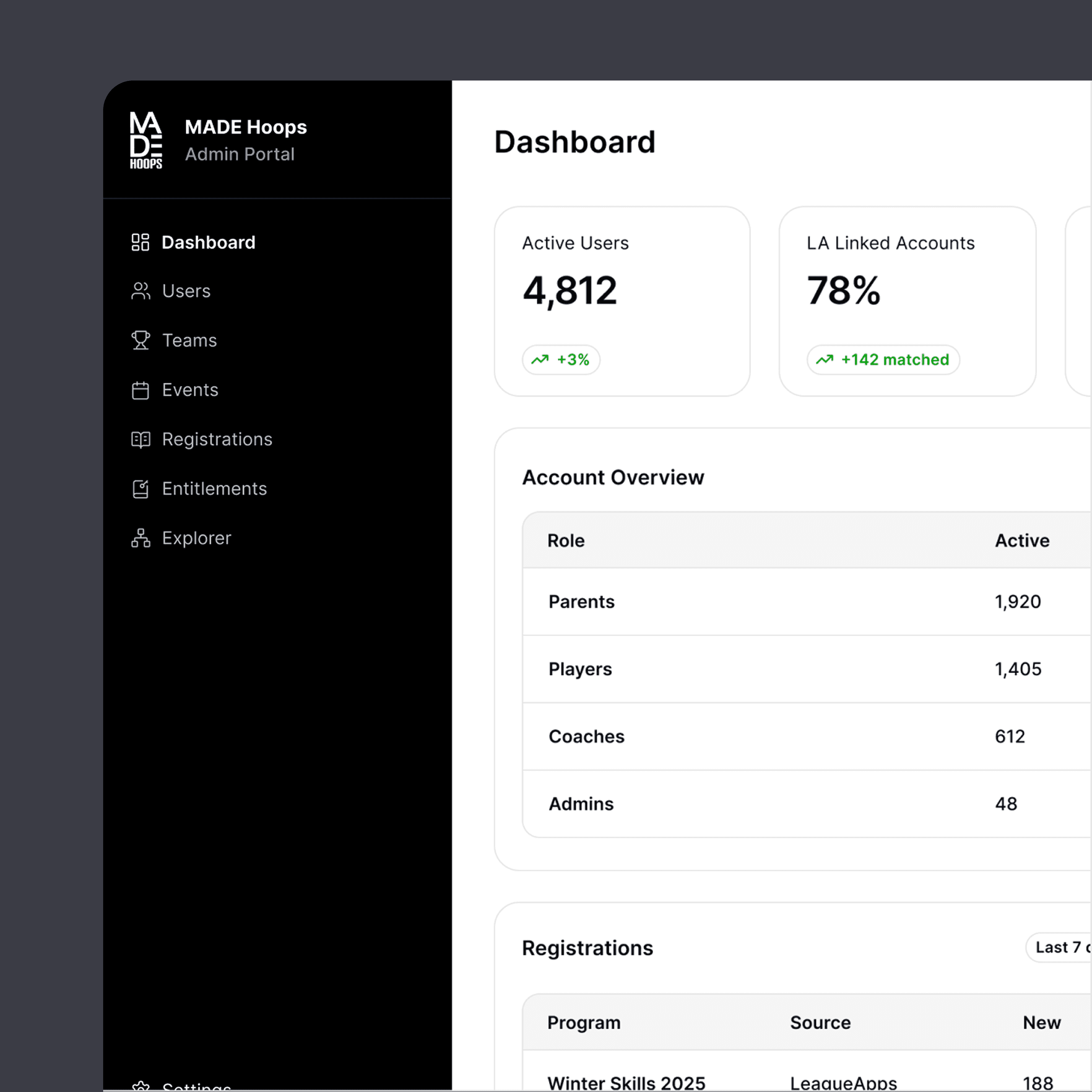
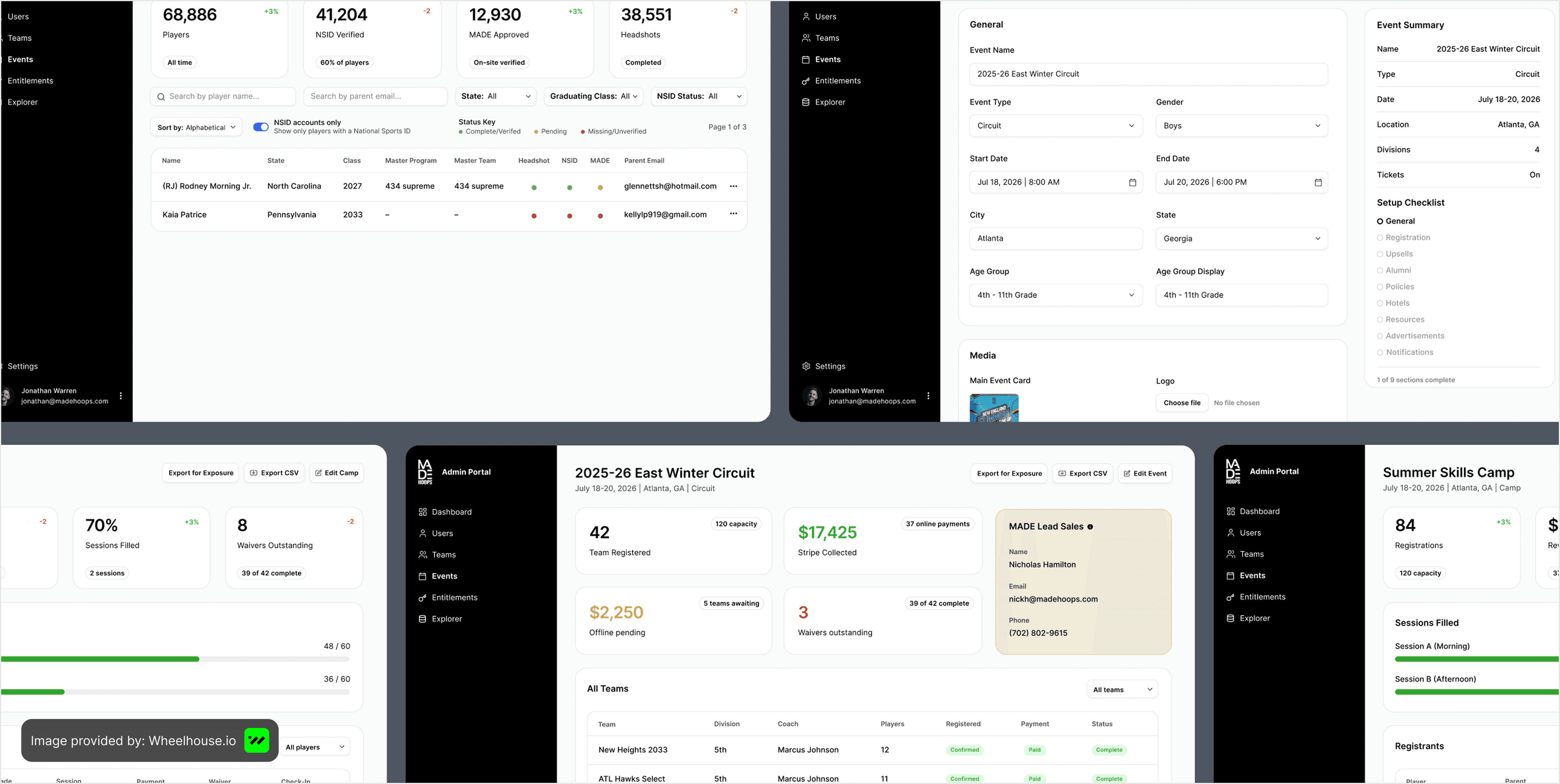
- Admin workflows: Core roster and event-management flows adapted into role-based admin tools.
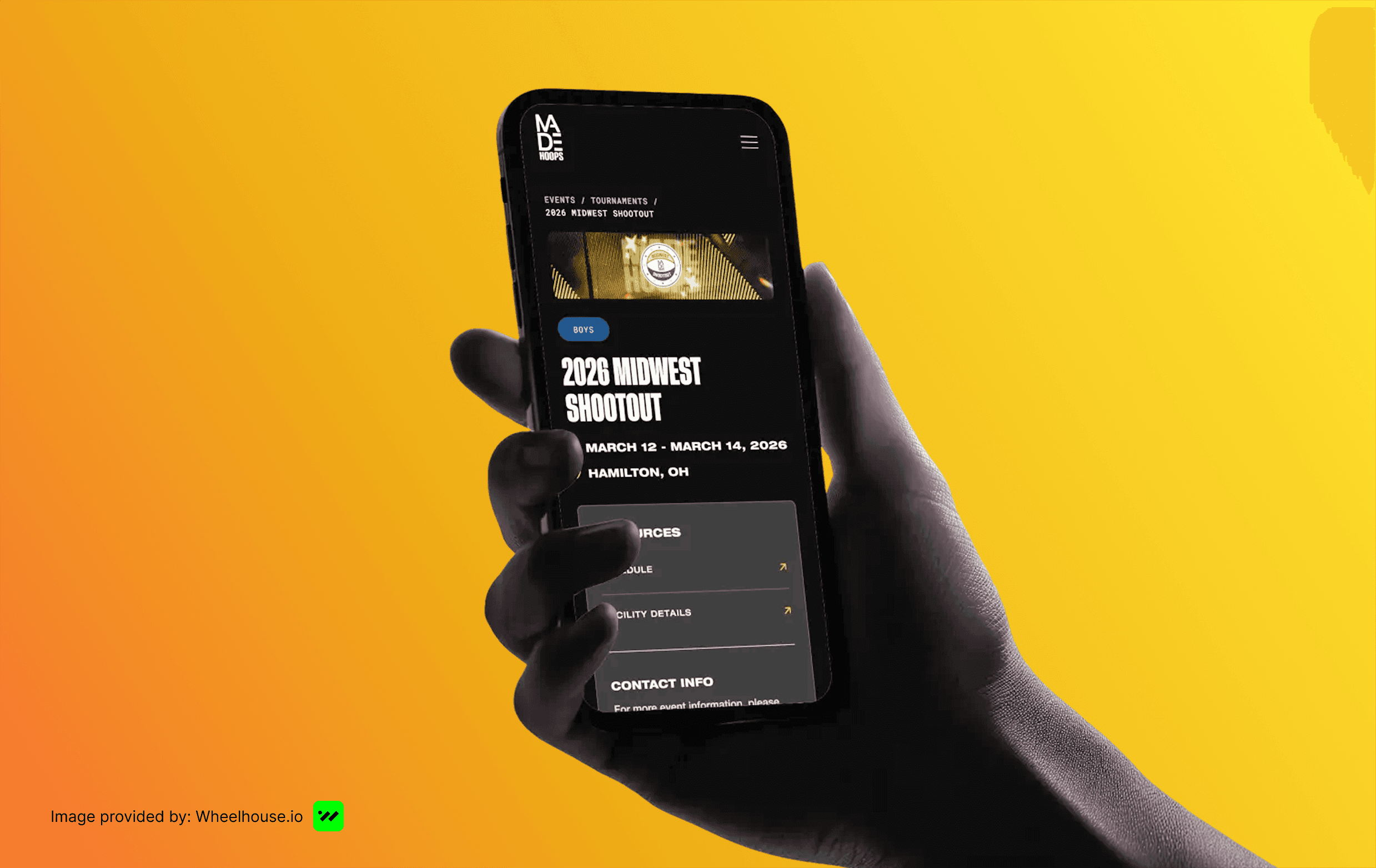
- Mobile access: Responsive portals serving parents, coaches, program directors, and MADE staff.
Want the deeper walkthrough?
These case studies are intentionally concise. For a closer look at the thinking, craft, and decisions behind the work, reach out.